Do you see pink or red in the sink when you brush your teeth? Many people think that occasional bleeding gums are normal, especially if they press a little harder on the toothbrush. But the truth is, healthy gums do not bleed. Bleeding is actually a warning signal from your body that you should not ignore. At Clinic for Smile, we will explain what's behind it and how to solve this problem effectively.
Why are my gums bleeding? The main culprit is called inflammation
Imagine you have a splinter stuck in your finger. The area will be sensitive, swollen, and may bleed when touched. This is the body's defensive reaction. It's exactly the same with your gums.
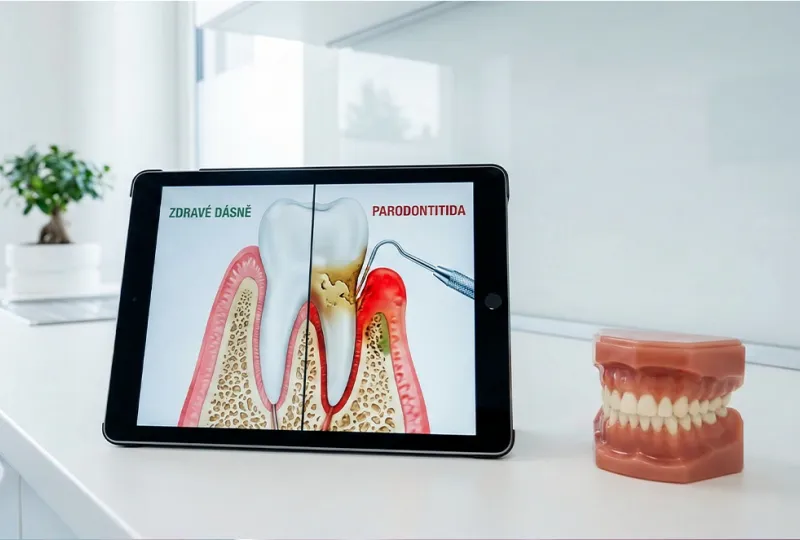
The "splinter" in this case is dental plaque – a sticky film full of bacteria that constantly forms on your teeth. If you don't remove plaque regularly and thoroughly, the bacteria in it produce toxins that irritate the gums. The body reacts to this with inflammation (technically gingivitis). The gum turns red, swells, and becomes so blood-filled and fragile that even a gentle touch from a toothbrush causes bleeding.
The most common causes of bleeding gums are:
- Gingivitis (inflammation of the gums): This is the most common and initial stage of gum disease. It is caused by the insufficient removal of plaque. The good news is that at this stage, the process is fully reversible with proper care.
- Incorrect brushing technique: A toothbrush that is too hard or excessive pressure can mechanically damage the gums. Paradoxically, brushing too gently and inadequately also leads to plaque buildup and subsequent inflammation.
- Lack of interdental hygiene: Up to 40% of the tooth's surface is in the interdental spaces. If you don't use interdental brushes or floss, you are letting plaque act undisturbed here.
- Periodontitis (paradontosis): If gingivitis is left untreated, it can progress to periodontitis. The inflammation progresses deeper, attacking the bone and tissues that hold the teeth in place. Bleeding is one of the serious symptoms here.
- Hormonal changes: Pregnancy, menopause, or puberty can increase gum sensitivity.
- Some medications: e.g., blood thinners (anticoagulants), some antihypertensives, antiepileptics.
- Other factors: smoking, diabetes, lack of sleep, stress, nutrition (e.g., long-term vitamin C deficiency), dry mouth.
From bleeding to periodontitis: Why early intervention is key
Gum inflammation (gingivitis) is the first, fully curable stage. However, if you don't address it, the inflammation progresses deeper and attacks the apparatus that holds the tooth in the bone. We call this condition periodontitis (colloquially paradontosis).
And this is a major problem. Unlike gingivitis, periodontitis causes irreversible damage:
- Gum recession and exposure of tooth necks.
- Breakdown of the bone socket in which the tooth is held.
- Wobbling of teeth and, in the final stage, their loss.
This is precisely why it is so important not to underestimate the initial signal – bleeding. It is the best moment to catch the problem and cure it completely.
The myth that harms: "If it's bleeding, I won't irritate it"
This is one of the biggest mistakes people make. When they notice bleeding, they start avoiding that area when brushing, thinking they are giving it peace to heal.
The opposite is true. By skipping brushing, you allow plaque to accumulate even more, which only worsens the inflammation.
The correct procedure is the exact opposite: gentle, but thorough and precise cleaning.
What can you do right now? 3 steps to healthier gums
If you've noticed bleeding, don't panic. Often, a small change in care is enough.
- Don't avoid cleaning, quite the opposite! Many people are afraid to clean bleeding areas. This is the biggest mistake. It is precisely there that plaque needs to be removed most carefully so the inflammation can calm down. Be gentle, but consistent. The situation should improve within a few days.
- Focus on interdental spaces. This is the area that 90% of our new patients neglect. A regular toothbrush cannot reach here. Use interdental brushes of the correct size daily. A dental hygienist can best advise you on the selection.
- Use the right tools. The foundation is a soft toothbrush with dense, straight-cut bristles. The technique matters more than the price of the toothbrush.

When is home care not enough and it's time to visit our clinic?
Make an appointment for a professional examination if:
- The bleeding does not stop even after 1-2 weeks of honest and correct hygiene.
- The gums are severely swollen, red, or painful.
- You suffer from persistent bad breath.
- You feel like your teeth are changing position or are wobbly.
- You notice that your gums are receding and your tooth necks are becoming exposed.
- You already have visible tartar on your teeth.
How we at Clinic for Smile will help you
Our goal is not just to solve the problem, but to teach you how to prevent it.
- Careful diagnostics: First, we will determine the exact condition of your gums and bone using probing and, if necessary, X-rays.
- Professional dental hygiene: Our hygienist will gently and thoroughly remove all plaque and tartar, even from places under the gumline that you cannot reach yourself. This is the basic step to healing.
- Individual instruction: You won't leave us just with clean teeth, but above all with knowledge. We will show you exactly what tools and techniques to use for your teeth, and we will practice everything together.
- Treatment of advanced conditions: If we find developed periodontitis, we will create an individual treatment plan for you to stop the disease.
Conclusion: Don't let a small problem grow into a big one
Bleeding gums are not a cosmetic flaw, but your body's call for help. The sooner you react, the simpler, faster, and cheaper the solution will be. Your gums are the foundation on which the health of your entire set of teeth stands. Take care of them.
Are you troubled by bleeding gums and not sure what to do? Don't wait for the problem to get worse. Make an appointment for an initial check-up and professional dental hygiene at Clinic for Smile. Our team will help you restore your gums to health and give you back a peaceful smile.
Frequently Asked Questions (FAQ) about Bleeding Gums
1. Can bleeding gums be caused just by a toothbrush that is too hard?
Yes, a toothbrush that is too hard or an aggressive brushing technique can mechanically injure the gum and cause bleeding. In the vast majority of cases we encounter, however, bleeding is a sign of inflammation caused by plaque. Even if you switch to a softer toothbrush (which we recommend), but do not remove the plaque thoroughly, the inflammation and bleeding will persist.
2. Will mouthwash help my bleeding gums?
Some mouthwashes (e.g., those containing chlorhexidine) can temporarily reduce the amount of bacteria and alleviate bleeding. However, this is only a supplementary solution that suppresses the symptoms, not the cause. The cause is dental plaque and tartar, which must be removed mechanically – with a toothbrush, interdental brush, and professionally by a dental hygienist.
3. My gums only bleed occasionally. Should I worry about it?
Absolutely. A healthy gum should not bleed at all – not when brushing, nor when biting into an apple. Even occasional bleeding is a signal that something is wrong in that area and plaque is accumulating, causing inflammation. It is the first warning sign that is ideal to catch.
4. I have a dental implant and the gum around it is bleeding. Is this a problem?
Yes, and potentially a big one. Bleeding around an implant is a very serious warning sign of inflammation (so-called peri-implantitis), which can lead to the loss of the implant. Implants do not have as strong a defense mechanism as natural teeth. If you notice bleeding, swelling, or pain around an implant, contact your doctor immediately.
5. I am pregnant and my gums have started to bleed, even though I brush my teeth the same way. What should I do?
During pregnancy, major hormonal changes occur in the body, which cause the gums to be much more sensitive and prone to inflammation (so-called pregnancy gingivitis). This makes it all the more important to maintain perfect oral hygiene during this period and to regularly visit a dental hygienist who can safely remove plaque and tartar.
6. How long does it take for gum inflammation to improve after visiting a hygienist?
If you start following the recommended home hygiene procedures after a professional cleaning (including diligent cleaning of interdental spaces), you should see a significant improvement. The bleeding should significantly subside or disappear completely within a few days, or at most one to two weeks.